Office Cleaning Checklist: 10 Essentials for a Pristine Workspace
A disorganized cleaning routine costs businesses more than most office managers realize. Sick days pile up in winter, a reception area leaves clients unimpressed before a single handshake, and staff begin to feel their environment isn’t cared for. These aren’t abstract problems, they’re measurable. A structured office cleaning checklist is the most direct fix: a 2014 Copenhagen Business School study found that open-plan offices experience a 62% higher illness-related absence rate, and unplanned absences alone cut productivity by 40%. The problem isn’t a cleaning budget issue. It’s a systems issue.
A proper commercial cleaning checklist turns reactive cleaning into a proactive system. Instead of wiping things down when someone complains, your team works through a documented, area-by-area workflow that covers what needs to happen daily, weekly, and monthly. This is exactly the kind of structure CleansePro builds for its Gold Coast clients: customized, frequency-matched routines that leave no surface forgotten and no accountability gap in the schedule.
This article gives you everything you need to build that system. You’ll find a room-by-room daily routine, the 10 non-negotiable essentials for any workplace cleaning checklist, a weekly and monthly schedule for deeper cleans, and a practical guide to choosing the right supplies and disinfectants. By the end, you’ll have a framework you can print, assign, and put into use immediately.
Why a poorly maintained office costs more than you think
Most office managers treat cleaning as a background task rather than an operational priority. The problem is that the consequences of a poorly maintained office show up in places that don’t immediately connect back to hygiene. A team member calls in sick. Concentration drops. Turnover creeps up. None of these get attributed to a dirty keyboard or a bathroom that wasn’t properly sanitized last Tuesday, but the link is real and well-documented.
The germ math behind shared workspaces
Office desks harbor over 10 million bacteria, roughly 400 times more than a toilet seat. That number sounds extreme, but it makes sense when you consider how often keyboards, phones, and shared printers are touched without anyone cleaning them in between. The CDC recommends that high-touch surfaces in office buildings be cleaned at least once daily, with frequency increasing during flu season or any outbreak period. When that doesn’t happen, a single contaminated surface becomes a transmission chain that touches every person who uses that desk, that printer, or that microwave handle throughout the day.
The downstream cost is significant. One absent employee disrupts workflows, triggers deadline pressure for colleagues, and often leads to presenteeism among the rest of the team, people come in sick and spread the problem further. According to the Integrated Benefits Institute, presenteeism costs US employers up to $150 billion annually. A consistent sanitization routine costs a fraction of that.
What counts as a high-touch surface in your office
High-touch surfaces are any point where multiple people make repeated contact throughout the day. In a standard office, these fall into three zones:
- Desk and workstation zone: desks and tabletops, keyboards, phones, shared printers, and touch screens
- Common area and transit zone: door handles, elevator buttons, light switches, meeting room tables and chairs
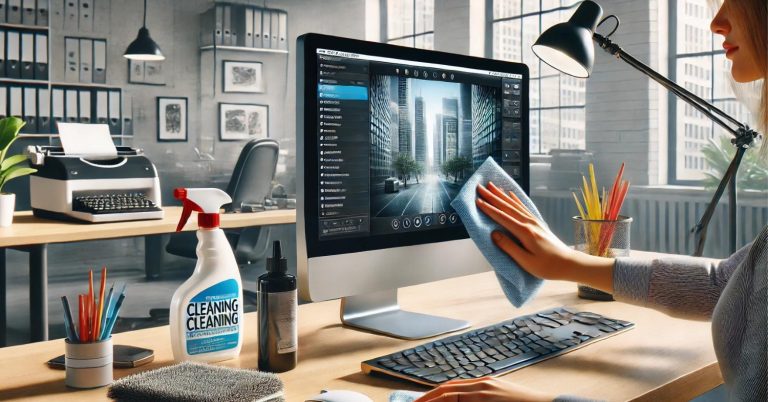
- Kitchen and restroom zone: microwave handles, coffee machine controls, fridge handles, bathroom faucets, and toilet handles
These surfaces form the backbone of any solid office sanitization checklist and should be the first priority in every daily cleaning round. If your team is working through a checklist and these surfaces aren’t on it, the checklist needs to be rebuilt from scratch, see our Unbeatable Office Cleaning Checklist for a practical example.
The daily office cleaning checklist, broken down by area
A daily cleaning routine works best when it follows the physical layout of the office rather than jumping between areas. A structured, room-by-room approach prevents tasks from being missed and helps cleaning staff develop a repeatable rhythm that becomes faster and more thorough over time. The goal here is a workflow, not just a list of tasks.
Reception, workstations, and meeting rooms
Reception is your first impression, and workstations are where your team spends most of their day. Both deserve daily attention. For reception: wipe and disinfect the front desk, sanitize door handles and light switches, empty the trash, tidy furniture, and spot clean floors. For workstations: disinfect desks, keyboards, phones, and any shared equipment; empty bins; and deal with any visible spills or mess. These tasks are quick when done consistently, typically under 30 minutes for a standard open-plan floor.
Conference rooms need a slightly different approach because they’re used in bursts. Before and after each meeting, wipe down the table and high-touch surfaces, organize chairs, and empty any trash. At the end of each day, do a full wipe-down of the table, handles, and any presentation equipment. This prevents the slow buildup of grime that makes conference rooms look neglected even when the rest of the office is clean.
Break rooms and restrooms
These two areas carry the highest contamination risk in any office and need the most consistent daily attention. For break rooms: disinfect countertops, appliance handles (microwave, fridge, coffee machine), and tables; empty and reline the trash; spot mop the floor; and restock paper products and soap. For restrooms: sanitize toilets, sinks, faucets, and countertops; mop the floor; and refill soap dispensers, paper towels, and toilet paper at every clean.
Skipping either area even one day creates compounding hygiene issues that are far harder to address than they are to prevent. Mold, bacteria, and lingering odors develop quickly in warm, wet environments. A daily routine keeps these areas in check without requiring deep intervention every week.
10 essentials for your office cleaning checklist
These aren’t suggestions or optional additions. Every office, regardless of size or industry, needs these ten items covered consistently. Think of them as the non-negotiables that separate a clean office from one that only looks clean on the surface.
Essentials 1 through 5: the daily non-negotiables
- Disinfect all high-touch surfaces at least once daily. Door handles, keyboards, phones, light switches, and shared equipment. These are your primary germ transmission points, and skipping them even once allows pathogens to build and spread.
- Empty and reline all trash bins. Overflowing bins attract pests, create odors, and signal to staff and visitors that the space isn’t cared for. This takes two minutes per bin and makes an immediate visible difference.
- Sanitize restrooms fully. Toilets, sinks, faucets, counters, floors, and all fixtures. Anything short of a full restroom clean leaves contamination behind that compounds quickly.
- Wipe down break room appliances and countertops. Microwave handles and interiors, fridge handles, coffee machines, and counters are touched by every staff member throughout the day. Leaving them until a weekly clean is too long.
- Spot clean and vacuum high-traffic floor zones. Entrances, corridors, and kitchen areas accumulate dirt and debris daily. A quick vacuum or mop of these zones keeps them presentable and prevents tracked-in grime from spreading further.
Essentials 6 through 10: the tasks most offices forget
- Disinfect shared equipment like printers and touch screens. These surfaces are handled constantly but rarely appear on basic cleaning lists. They’re high-risk and easy to overlook.
- Clean interior glass, mirrors, and partition panels. Smudged glass and fingerprint-covered partitions make an office look neglected even when everything else is clean. A quick wipe with a glass cleaner takes under five minutes and makes a significant visual difference.
- Restock consumables at every cleaning round. Running out of soap or paper towels mid-day disrupts staff, creates hygiene gaps in restrooms, and sends a poor message to clients. Restock during every clean, not just when something runs out.
- Check and wipe light switches and elevator buttons. These are among the highest-touch surfaces in any building and are frequently missed on basic cleaning rounds. They belong on every daily checklist without exception.
- Log completed tasks on a janitorial checklist. A cleaning task that isn’t logged isn’t accountable. A physical tick sheet or digital log creates a record that managers can review, that cleaners can reference, and that proves due diligence if hygiene concerns ever arise. A printable log makes this step effortless and adds real structure to any routine.
Weekly and monthly tasks that prevent buildup
Daily tasks maintain baseline hygiene. Weekly and monthly tasks address the slow accumulation of grime, dust, and deep contamination that daily routines simply can’t reach. Layering these into your schedule protects both the appearance and the long-term health of your workspace.
What to schedule every week
Weekly additions to your workplace cleaning checklist should cover the following:
- Thorough vacuuming under desks and along skirting boards
- Deep cleaning restrooms beyond the daily wipe-down, scrubbing toilets, sinks, and grout
- Mopping all hard floors with an appropriate floor cleaner
- Dusting shelves and high surfaces that accumulate dust between daily rounds
- Cleaning appliances inside and out, including the interior of the microwave and fridge
- Disinfecting the trash bins themselves, not just replacing the liners
These tasks form the second tier of a solid cleaning routine. They take longer than daily tasks but protect the hygiene investments your daily routine makes. Without a weekly deep clean, residue builds on surfaces that look clean at a glance but harbor bacteria and allergens beneath.
Monthly tasks worth blocking out time for
Monthly tasks focus on long-term asset protection and deep sanitation. Schedule time for shampooing carpets and upholstered furniture, washing interior windows, cleaning air vents and return grilles, scrubbing behind and beneath furniture, and conducting a full supplies audit to identify what needs restocking or replacing before it becomes urgent.
These tasks directly affect indoor air quality, which is one of the most overlooked factors in office health. Dust-clogged vents and contaminated carpet fibers recirculate allergens and bacteria through the air your team breathes every day. A monthly deep clean addresses what daily and weekly routines can’t, and it protects your furniture, flooring, and HVAC system from the kind of buildup that leads to costly repairs and replacements.
Choosing the right supplies and disinfectants for the job
A checklist is only as effective as the products used to execute it. Using the wrong cleaner on the wrong surface, or applying a disinfectant without cleaning the surface first, delivers results that look clean but aren’t. Choosing the right tools matters as much as the routine itself.
EPA-approved disinfectants that actually work
The EPA’s List N is the reliable reference for verifying disinfectants against SARS-CoV-2, influenza, and common cold viruses (including rhinovirus) on non-porous office surfaces. The most widely used categories include quaternary ammonium compounds (QACs) for general surfaces, hypochlorous acid-based cleaners for sensitive shared equipment like touch screens, and plant-based Design for the Environment (DfE)-certified options for eco-conscious workplaces or environments where staff sensitivities are a concern.
One point most teams skip: surfaces must be cleaned before disinfection, not instead of it. Disinfectants applied to dirty or greasy surfaces cannot penetrate to the pathogen layer beneath. Clean first, disinfect second. This two-step process is the standard the CDC endorses and outlines in its cleaning procedures for healthcare and shared spaces, see the CDC’s cleaning guidance for procedures and best practices here.
A practical janitorial supply checklist for your team
Every office cleaning kit needs the following core categories covered:
- Color-coded microfiber cloths: blue for general surfaces, red for restroom fixtures, yellow for glass and mirrors. Color-coded cleaning supplies aren’t a preference; they’re how commercial cleaning professionals prevent cross-contamination between restroom and general cleaning zones.
- HEPA-filtered vacuum: standard for allergen control, especially important in carpeted offices.
- Mop and bucket system: microfiber mop heads with a wringer, separate from restroom mops.
- All-purpose EPA-approved surface cleaner, glass cleaner, floor cleaner, and bathroom-specific products: each formulated for its intended surface type.
- Nitrile gloves and wet floor signs: non-negotiable for staff safety and liability.
- Paper consumables: toilet paper, paper towels, hand soap; stock enough to last between delivery cycles without running out mid-day.
Store color-coded tools separately from each other. Cross-contamination happens in the storage cupboard just as easily as it does during cleaning rounds, so physical separation of red, blue, and yellow items needs to be built into your storage system, not just your cleaning protocol.
How to make your checklist work consistently
A checklist written on paper and left on a clipboard achieves very little. A checklist embedded into a daily operational routine, with assigned tasks, signed-off completions, and a manager who reviews the log, achieves everything. The structure behind the checklist is what makes it work.
Printable templates and digital tracking options
A printable office cleaning checklist in PDF or Word format gives your team a physical reference they can tick off in real time, area by area, task by task. Many facility managers use free templates from cleaning companies or janitorial software platforms, adapting them to their specific office layout. The key features to look for are task frequency columns (daily, weekly, monthly), area-specific sections, a completion sign-off field, and space for notes. You can also refer to an office cleaning checklist template as a starting point, or download a ready-made Office Cleaning Checklist PDF for easy printing and immediate use.
Digital tracking apps offer the added benefit of timestamped task completion, which is useful for compliance reporting in commercial, healthcare-adjacent, or multi-site environments. Some platforms also allow photo documentation, which creates an auditable record of cleaning standards across shifts. For smaller teams, a printed sheet in a shared folder achieves the same accountability at zero cost.
When a customizable checklist makes more sense
A generic template works well for small, single-floor offices with a straightforward layout. But offices with multiple zones, rotating cleaning staff, high-hygiene requirements, or complex scheduling often need a checklist built around their specific workflow rather than a one-size-fits-all document. A template designed for a three-room office won’t capture the cleaning needs of a 30-person commercial floor with dedicated meeting suites, a full kitchen, and two restrooms on separate levels.
This is where CleansePro’s approach delivers a real operational advantage. As part of its commercial office cleaning service across the Gold Coast, CleansePro provides clients with customized cleaning checklists tailored to their actual office layout, task frequency, and team schedule. Every clean is paired with live digital inspection photos, giving office managers full visibility into what was done, when it was done, and how it was completed, without having to be on-site for every session. Police-checked teams, a 24-hour quality guarantee, and no lock-in contracts make it a structured, accountable approach to office hygiene that removes the administrative burden from your team entirely.
Put your checklist to work this week
A structured office cleaning checklist isn’t an administrative task. It’s a health and productivity tool that protects your staff, your assets, and your reputation. The framework is straightforward: daily high-touch disinfection across all key areas, room-by-room routines that don’t miss break rooms or restrooms, weekly and monthly deep cleans that prevent buildup, the right EPA-approved supplies matched to each surface type, and a printable or digital log that keeps every team member accountable.
Take the structure in this article, adapt it to your office layout, and put it into use this week. Print it, assign it, and review the log at the end of each week. The difference in your workspace within a fortnight will be visible. The difference in sick days over a quarter will be measurable, and if you want to read more about how a tidy workplace supports staff performance, see 7 Proven Ways a Clean Office Boosts Productivity.
If your office needs this handled professionally rather than managed in-house, CleansePro’s office cleaning service across the Gold Coast delivers exactly this kind of structured, documented, and guaranteed approach. No lock-in contracts, a 100% satisfaction guarantee, and a team that brings the checklist, the supplies, and the accountability from day one. Get in touch with CleansePro today and let us build a cleaning routine your office can actually rely on.