Post Construction Dust Removal Checklist Template
A commercial cleaning checklist template for post-construction dust removal should treat construction dust differently from everyday dirt. Construction dust is finer, more abrasive and tends to lodge in vents, light fittings and joinery, so teams need a staged approach and defined hold-points to protect finishes and HVAC systems. This checklist focuses on HEPA-level control and targeted sequencing and gives site supervisors clear, actionable steps rather than a vague “final clean” instruction.
Whether you are an office manager, construction site supervisor, property manager, healthcare or education administrator, or a homeowner arranging a handover clean, a tailored commercial cleaning checklist template sets scope, timing and quality expectations. One-pass cleans often miss hidden traps such as window channels, ceiling grids, recessed lighting, skirting edges, ductwork and the backs of cabinetry; rushing increases the chance of rework, complaints and failed handovers.
What you need to know
Key controls and sequencing stop dust from spreading and protect sensitive systems during handover. Plan work by risk and follow a high-to-low flow so dust is captured rather than pushed into vents or finishes. Use the commercial cleaning checklist template to record each stage and make responsibilities clear.
Remove coarse grit and debris before any wet wiping to avoid grinding particles into sealed floors and joinery. Use dry-capture tools and brushes to clear loose material, then follow with HEPA vacuuming for finer dust. Leave damp wiping until the final pass to lock in the clean finish.
Why post-construction dust removal needs a dedicated checklist
Construction dust carries materials such as silica and gypsum and behaves differently from household dust. It is more abrasive, can scratch finishes and can migrate into HVAC systems if not captured properly. A commercial cleaning checklist template clarifies scope, time and quality expectations for crews and subcontractors and reduces ad-hoc or incomplete work.
Hidden pockets of dust are common trouble spots: window channels and glazing tracks, ceiling grids and recessed lighting, vent grilles and accessible ductwork, skirting and baseboard grooves, and the backs of cabinetry and built-ins. These areas usually require a separate dry-capture pass and targeted attention during the detail clean to avoid return visits.
Failing to capture these pockets leads to predictable return visits, warranty risk and unhappy clients. Overlooked HVAC grilles can blow dust into ceiling tiles and carpets after handover, and unswept window channels may cause staining that delays signoff. Build realistic time estimates and hold-points into your checklist so critical items are inspected before final approval. Use the following step-by-step checklist to convert those hold-points into a printable or digital job sheet.
Post-construction dust removal checklist: step-by-step for commercial sites
Use staged removal with HEPA-level control and microfiber capture so dust is not pushed into vents, light fittings or joinery. A proper pre-clean prevents contaminants from being ground into surfaces during final floor work and protects HVAC systems from long-term wear. Turn this staged flow into a printable operational sheet with columns for zone, task, time, staff initials and photo links so inspectors can sign off.
- Site prep and safety checks: Walk the site, log hazards, set protected access routes and confirm any permits or contractor interfaces before cleaning begins. Brief crews on restricted areas and required protection for finishes. Confirm lockout-tagout protocols and contractor windows so cleaning proceeds without conflict.
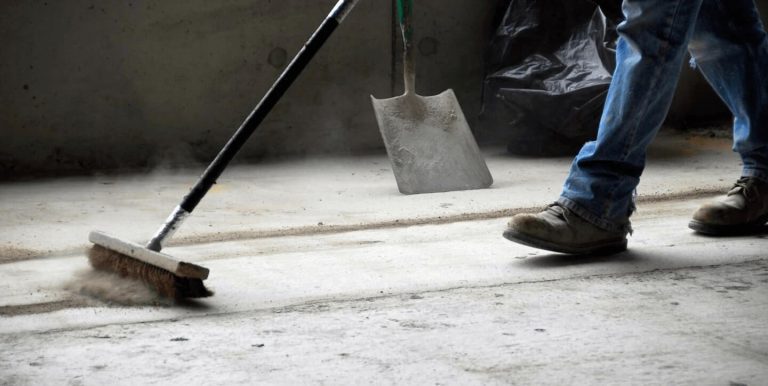
- Rough debris removal: Collect large waste, clear rubble and remove coarse materials so crews are not handling heavy grit during detail work. Use heavy bins and mechanical sweepers where needed, and separate recyclable materials. Removing coarse debris early reduces wear on HEPA vacuums and finishing machines.
- Primary dust capture: Perform high-to-low HEPA vacuuming and high dusting, clearing ceiling grids, duct grilles, light fixtures and vents with appropriate attachments and microfiber tools. Work systematically from ceilings, ledges and light fittings down to benches and cabinetry to catch settled dust. Log each pass with photos to track progress and verify hold-points.
- Detail clean: Clean window channels, glazing, switches, joinery edges and behind cabinetry using dry-capture methods followed by damp-wiping of final surfaces. Use lint-free microfiber and gentle agitation to remove trapped dust, then follow with a damp wipe using neutral cleaners. Verify switches and fittings are residue-free before polishing glass or sealing surfaces.
- Floor preparation and machine scrub: Dry-vacuum floors to remove grit, then machine scrub or polish as required using neutral-pH products suitable for finished surfaces. Ensure floor finish is compatible with the cleaner and that buffers run at recommended speeds. Tape off freshly treated areas until fully dry to prevent marring from foot traffic.
- Inspection and documentation: Complete photo-verified passes, record hold-point approvals and run shadow cleans as needed before client walkthrough. Use timestamped photos linked to checklist items and record any corrective work in a rework log. Retain digital records for warranty and dispute resolution.
- Client walkthrough and sign-off: Present the inspection log, address any punch items, obtain client acceptance and archive the digital certificate. Walk through with the client and review photographed evidence of completed hold-points. Capture final signatures and distribute copies to stakeholders.
Use the staged flow to populate your commercial cleaning checklist template and allocate time estimates by zone. Next, customise the template for different facility types and compliance requirements so it fits the job. For examples of practical checklist layouts and task grouping you can adapt, see a useful commercial cleaning checklist that demonstrates common frequencies and columns used in operational sheets.
How to customise the commercial cleaning checklist template for your facility
Start with a master commercial cleaning checklist template and swap tasks to match the actual work. Maintain the same structure so you can reuse frequencies and time estimates across sites, and bold critical items so supervisors can build accurate shifts and avoid overtime. Save a client-specific master file so updates propagate across projects.
For offices, add keyboard and monitor wipes, shared equipment disinfection and meeting-room reset checks. Assign frequency to high-touch items and include spare supplies for quick restocking during shifts.
For retail, include display glass polishing, dressing-room inspections and merchandising-area spot-cleaning. Schedule these tasks during low-traffic periods to avoid disrupting customers and note priority displays on the checklist.
For restaurants, add explicit food-contact surface sanitation, table and condiment station sanitising and grease-control tasks. Include sanitizer concentration logs and rinse steps to meet food-safety requirements; a practical restaurant cleaning checklist is a good reference for food-contact and front-of-house items you should never omit.
For warehouses, swap in heavy-duty floor sweeping, pallet-area degreasing and high-reach dusting. Adjust time estimates for forklift traffic and bulk-storage access restrictions.
Document everything with dated entries, staff initials and reference numbers for sanitizer test strips or probe calibrations so auditors can trace actions. Convert the master file into daily, weekly and monthly checklists by assigning tasks to frequency columns and adding time-per-task estimates. Scale those times by floor area and foot traffic to keep estimates realistic.
Supplies, equipment and safety for post-construction cleaning
Specify required gear in your commercial cleaning checklist template so procurement buys the correct specifications for post-construction sites. A clear equipment list with minimum performance notes prevents teams from improvising on site and ensures consistency across handovers.
HEPA-certified vacuums should meet 99.97% capture at 0.3 μm and have strong suction and a commercial motor. Choose models with washable pre-filters and a clear maintenance schedule for filter replacement; list required hose and tool attachments for high dusting and duct work. For guidance on suitable heavy-duty units and attachments, see industry resources on industrial vacuums.
Specify walk-behind scrubbers with an 18 to 32 inch cleaning path, adjustable brush pressure and sufficient runtime or swappable batteries for larger sites. Note compatible pad types and approved detergents to avoid surface damage during machine scrubs.
Choose microfiber systems and high-GSM cloths (350 to 500 GSM) to trap fine dust without scratching finishes. List reusable pads and mop heads to reduce waste and lower operating costs.
Include high-reach dusters and extendable poles that reach up to four metres for high dusting, and specify HEPA-adapter connections where possible. Provide guidance on safe use around lighting and ceiling fixtures to avoid damage.
Require non-abrasive pads and low-speed buffers for finished floors and recommend neutral pH pads to avoid surface damage. Add guidance on buffer speeds and pad replacement intervals to protect floor finishes.
Chemicals should protect finishes and occupant health: use hospital-grade disinfectants where clinical risk exists and neutral pH floor cleaners for polished or sealed surfaces. Offer lower-VOC options for occupied buildings and alternatives for teams with allergies, and buy trade-priced consumables to reduce cost per handover.
PPE and hazardous-dust procedures protect crews and provide compliance records. Stock N95 or P2 respirators, eye protection, nitrile gloves and disposable coveralls, and include fit-testing and replacement schedules on the checklist. If silica, lead or asbestos is suspected, stop work and contact a licensed remediation specialist immediately and document air readings and site decisions.
Tag and double-bag contaminated waste, label with hazard details and retain disposal receipts to meet regulatory audit requirements. Keep these records with the project file and note disposal references on the checklist for client and regulator review.
Training, inspections and quality assurance for large builds
Training should be short, practical and repeatable so crews perform consistent handovers. Use a guided walk-through, a timed run to set pace, shadow cleans to capture site-specific nuance and a competency sign-off for each area. Run practical drills using the commercial cleaning checklist template so teams learn task order and what an acceptable finish looks like.
Make inspections digital and auditable from day one by capturing photos, timestamps and notes against a single inspection log that can be exported. Link each photo back to a checklist row so you can prove which task passed or failed and when. For additional facility-level guidance and downloadable checklists that align with these practices, review a facility cleaning checklist overview.
Keep a simple rework log that records the issue, owner, corrective action, photo evidence and completion time. Include a client sign-off line and a final digital acceptance certificate to close the loop and avoid disputed claims. Use the rework log during the client walkthrough to show transparency and speed resolution of punch items.
Download the checklist template and sample implementation plan
Download a ready-to-use pack that includes a printable cleaning checklist PDF, an editable Excel or Google Sheet for logs and reporting, and an editable Canva file you can brand for client copies. The PDF works as a pocket guide for supervisors on site, while the editable files let you tailor columns, add inspector fields and capture time-stamped photos or comments. Remove irrelevant zones, update time estimates to match your crew’s pace, add client-specific hold-points and save a master file so updates propagate to every site. For a practical starting point, consider the Final Builders Clean Checklist (Free Download) included in our resources.
Print laminated site masters and pocket cards for supervisors so the checklist is always on hand and easy to wipe between shifts. Use the digital files for job management integration and live inspections to keep evidence linked to each task.
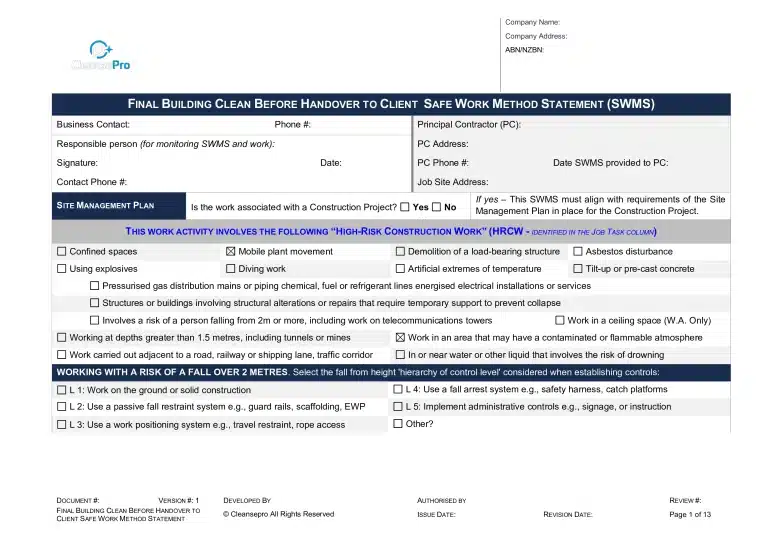
CleansePro can run this checklist as a managed post-construction clean if you prefer to outsource complex handovers. Pilot the approach on a single area: download the pack, customise the Excel log, brand the Canva copy and train a small crew on the laminated site master and pocket card before scaling up. For a sample safe-work-method statement you can adopt into your induction and site files, see the Download Cleaning SWMS Template Free Sample + 2025 Edition. Pilot, refine and document the process to demonstrate quality, speed handovers and reduce client callbacks.
Final steps: use the commercial cleaning checklist template
Construction dust is finer, more abrasive and capable of causing long-term damage if not removed correctly. Two practical takeaways are easy to apply: remove abrasive particles first, then verify every surface with a documented pass. Start by selecting a high-traffic zone, perform one full pass using the commercial cleaning checklist template and log any corrective actions. If you prefer to outsource, contact CleansePro to book a managed post-construction clean with eco-safe products, live digital inspections and a 24-hour quality promise. See one of our completed handovers in the Our Work | Central on Case St | CleansePro Builders Clean case study for a practical example of these steps in action.