Office Cleaning List: Task-by-Task Guide
Office Cleaning List: Task-by-Task Guide
A clear office cleaning list removes guesswork and keeps your workplace healthy and presentable. This guide includes a printable daily checklist with checkboxes and initials for accountability, plus weekly, monthly and deep-clean guidance. Use the checklist before the business day or during a short midday window to reduce sick days, prevent clutter and keep clients and staff comfortable.
The daily office cleaning checklist covers desks, floors, restrooms and common areas with timing and sign-off fields so you can build an efficient office cleaning schedule. You will also find a concise janitorial checklist for break rooms, meeting rooms and reception and a compact office cleaning supplies list to keep the right materials on hand. If you manage multiple sites, use the commercial office cleaning checklist to assign shifts and decide when to move to an office deep clean or a workspace sanitisation checklist after incidents. At the end you’ll have a one-page printable template to post and standardise quality across teams.
Quick summary
Here are the essentials to start and scale your cleaning routine. Use the daily checklist to target touchpoints and trash, batch weekly and monthly tasks to catch hidden dirt and keep a compact supplies list so restocking is obvious. Split routine tidiness from specialist work and post one-page checklists with checkbox and initials columns to standardise quality across sites.
- Daily checklist: Use the printable quick-start office cleaning checklist each morning or during a short midday window to focus on high-touch areas, empty bins and record a simple sign-off to reduce sick days and improve presentation.
- Weekly & monthly: Batch focused tasks such as vents, upholstery and floors into scheduled weekly and monthly slots so small issues do not become big problems.
- Supplies & disinfectants: Keep a compact, colour-coded supplies list and match registered disinfectants to each surface; set clear restock thresholds.
- Roles & schedule: Split routine tidiness from specialist work, assign shifts with initials for accountability and use short windows or after-hours slots to avoid disruption.
- Printable templates: Post one-page checklists with checkbox and initials columns to standardise quality, speed handovers and simplify audits across sites.
Quick-start office cleaning list (daily checklist at a glance)
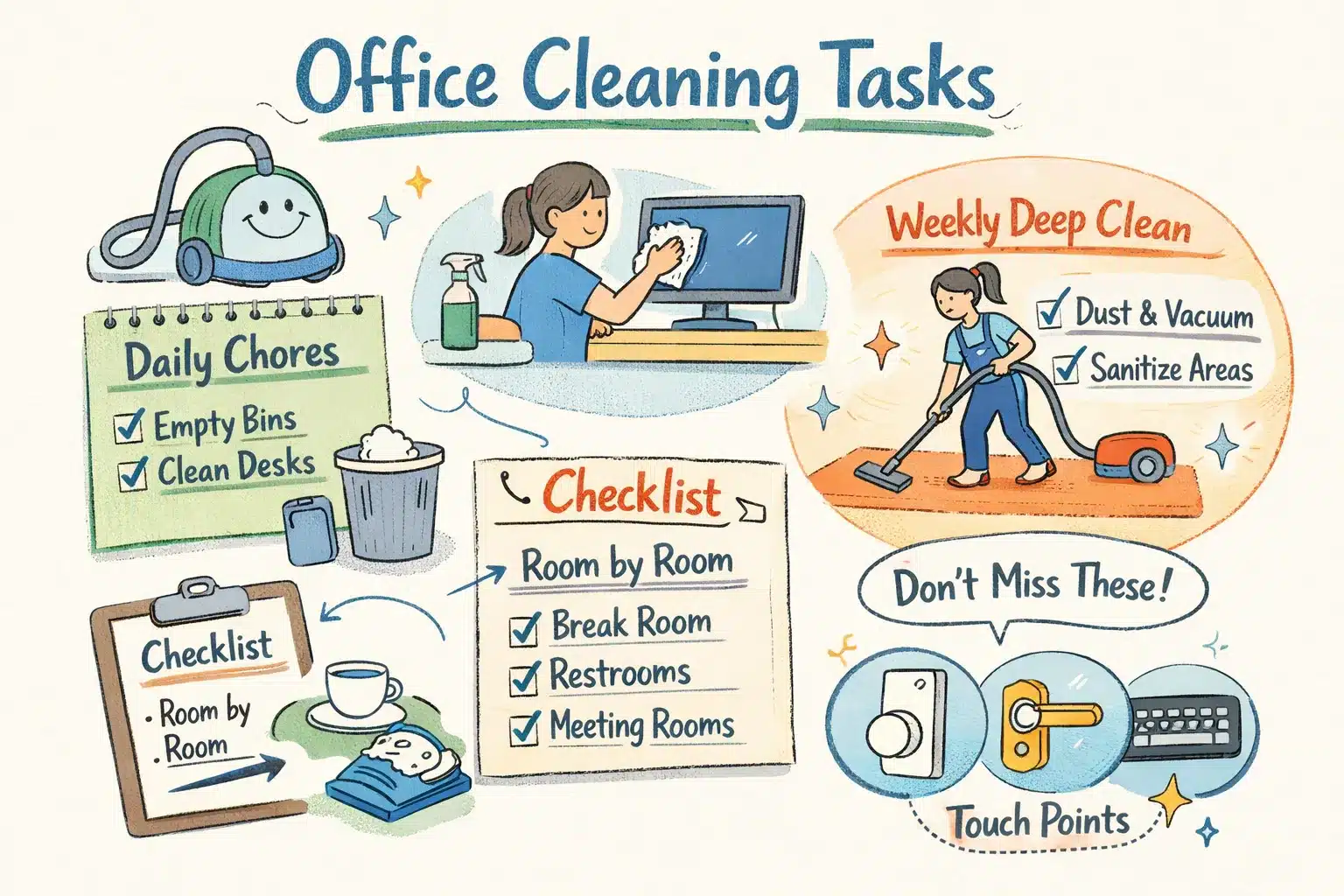
Start each day with a short plan that keeps the workplace healthy and professional. The quick-start daily office cleaning checklist can be handed to staff or contractors so everyone knows which tasks to prioritise before the first meeting. Use the checklist as the backbone of your office cleaning schedule and as a simple accountability tool with initials and timestamps.
Daily essentials concentrate on touchpoints, waste control and floor care. Complete these items before the main business day or during a short midday window.
- Dust and wipe desks and monitors, and sanitise keyboards, mice and phones.
- Empty bins and replace liners, and spot-clean carpets and entry mats.
- Vacuum or sweep floors and wet-mop hard floors in common areas.
- Clean and sanitise toilets, sinks and mirrors, and restock soap and paper supplies.
- Wipe shared surfaces such as door handles, light switches, printers and kitchen counters.
These tasks form the core of a daily office cleaning checklist and prevent small problems from becoming larger issues. Complete them consistently to keep the workplace comfortable and reduce the need for reactive, time-consuming cleans.
High-traffic and shared spaces need fast, repeatable actions. Wipe tables, armrests and AV remotes in meeting rooms and reception between uses, and empty kitchen bins after lunch service. Keep a short shared-appliance checklist for fridge handles, kettle buttons and copier touch panels so you get quick wins without disrupting staff.
For a one-page printable layout, set four columns: Area, Task, Checkbox and Time/Initials. Keep line-height tight so the page fits one side of A4 or letter. Post the sheet near supplies and review signatures at day end. (See a ready layout in the office cleaning checklist PDF.)
- Reception, wipe counters, [ ], __:__ / __
- Open office, disinfect keyboards, [ ], __:__ / __
- Restrooms, restock soap, [ ], __:__ / __
Weekly and monthly tasks: what to schedule next
Extend daily wipe-downs by scheduling focused weekly tasks that prevent small issues from growing. Add these items to your office cleaning list and to your broader janitorial checklist so teams know what falls outside daily duties. Prioritise the following weekly chores and assign them to a rotation so deeper cleaning is not skipped.
- Dust high surfaces such as light fixtures, tops of cabinets, vents and blinds.
- Vacuum under desks, behind cabinets and all carpet edges.
- Mop thoroughly in kitchens, hallways and meeting rooms.
- Disinfect shared equipment including printers, conference remotes, phones and keyboards.
- Clean kitchen appliances and wipe out the fridge; discard old food weekly.
Schedule monthly deep-clean tasks to prevent buildup and protect indoor air quality. Examples include HVAC vent vacuuming and grille wipe-downs, deep carpet spot treatments or booked steam cleanings, window washing inside and out, and grout and tile scrubbing in toilets and kitchen areas. Add a logging field in your monthly template to track completion dates and any supplies used from your office cleaning supplies list. For a practical task-by-task guide you can follow, consult the ultimate office cleaning checklist.
Plan quarterly and annual maintenance as larger projects that need lead time and budgeting. Typical items include buffing and polishing hard floors, professional carpet and upholstery cleaning, blind cleaning and thorough HVAC inspections with filter changes. Schedule these during low-traffic periods and allocate budget line items in advance so specialists can be booked on time.
Office cleaning supplies list and disinfectant guide
Build a compact supply kit that covers daily touchpoints and keeps crews efficient. Add these essentials to your office cleaning list so restocking is obvious at a glance:
- Microfibre cloths (colour-coded)
- All-purpose cleaner and disinfectant wipes
- Mop and bucket with wringer
- Nitrile gloves and trash liners
Microfibre cloths trap more dirt and microbes than cotton and require less chemical, so teams can clean faster and safer. Use a simple colour code to avoid cross-contamination: blue for general surfaces, red for restrooms, green for kitchens and yellow for high-touch electronics. Keep cloths grouped by colour in labelled pouches on the trolley and launder at 60 degrees after use to preserve performance and hygiene.
Match disinfectants to site and surface. Hydrogen peroxide and quaternary ammonium compounds work well on hard surfaces, bleach solutions are appropriate for heavy soil and viral control, and alcohol-based wipes suit electronics. Always follow the product label for contact time and adequate ventilation, and never mix cleaning chemicals. Prefer products registered for pathogen claims where labels support them, and keep a workspace sanitisation checklist near your supply area for quick reference. Refer to the EPA-registered disinfectants list when choosing products.
For deeper or higher-risk cleans, stock PPE and specialist equipment such as nitrile gloves, eye protection for splash risk, wet floor signage, HEPA vacuums and mops with wringers. Use electrostatic sprayers for fast, even coverage across large surfaces and require respirators when working with concentrated chemicals or dusty post-construction areas. See the CDC guidance on supplies and equipment for recommended PPE and tools. Create an auto-restock list and a small inventory sheet so supplies are replenished before they run out.
How to assign responsibilities and build an office cleaning schedule
Split day-to-day tidiness from specialist cleaning so roles are clear and nothing is missed. Staff should keep personal workstations tidy, manage immediate spills and remove food waste while contracted cleaners handle floors, restrooms, communal kitchens and scheduled deep cleans. Post simple lists at each zone so duties are visible and easy to follow.
Mark tasks that require training or protective gear as contractor-only, such as carpet extraction, high-level dusting, floor stripping and restroom descaling. These jobs may require respirators or special handling protocols, so include safety notes on your schedule. Remind staff to clear sensitive items and remove documents or hard drives from shared printers and desks before cleaners arrive to protect privacy and reduce interruptions.
Create a rotating matrix with daily, weekly and monthly columns and fields for task, assigned owner, completion time and initials. Use a rotation rule so no one always gets the least desirable jobs, for example moving owners down one slot each week or pairing less desirable tasks with a preferred one. Hold short weekly check-ins to reassign missed items and keep the matrix accurate.
Track completion digitally with mobile checklists, photo sign-offs and cloud logs using tools such as Jotform, SafetyCulture or a shared spreadsheet. Photo evidence and timestamped logs reduce disputes and simplify audits, especially across multiple sites. If you use an external provider, require live digital inspections and a clear quality guarantee so accountability remains simple and verifiable.
Printable office cleaning list and templates
Every printable set should provide clear, actionable sheets so nothing slips between shifts. Include these core pages in a binder or folder so checks are fast and consistent:
- One-page daily quick checklist for touchpoints and trash
- Three-column weekly planner (day / zone / tasks)
- Monthly deep-clean log for scheduled specialist tasks
- Supplies inventory with reorder triggers
- Inspection and notes box for issues and corrective actions
Build accountability into the sheets with signature and timestamp fields so every entry is traceable and auditable. Add a priority flag (low / medium / high) next to problem areas so cleaners and supervisors know what to escalate first. Clear timestamps reduce rework and speed incident response, and a signed log protects both you and your provider if disputes arise.
Scale templates by headcount and site size. Small offices can combine daily and weekly items on one sheet, medium sites should use separate daily, weekly and inventory pages, and large sites benefit from zone-based sheets and digital forms per shift. Increase cleaning frequency for kitchens and high-traffic zones, add extra inspection rows when multiple shifts use the same areas and assign zone owners for consistent handovers.
CleansePro supplies contract clients with pre-filled PDF and Excel templates and mobile-friendly versions on request. They can pre-list rooms, chosen frequencies and consumables so templates arrive ready to use. Ask for a sample when you book a walkthrough.
Reduce germ spread: sanitisation checklist and deep clean triggers
Follow local public health guidance and manufacturer instructions for high-touch surfaces. Clean daily and disinfect more often in busy areas, use soap and water first when surfaces are visibly dirty, and follow product labels for contact time and ventilation. For screens and sensitive equipment, apply manufacturer-approved wipes or alcohol-based solutions to a cloth rather than spraying devices directly.
- Door handles, push plates and handrails: clean at least daily, and multiple times per shift in high-traffic zones.
- Light switches, elevator buttons and shared controls: clean at least daily.
- Phones, keyboards, mice and conference-room remotes: clean at least daily and more often for hot desks.
- Breakroom surfaces, faucets and restroom fixtures: clean daily with spot disinfection during the day as needed.
Trigger an immediate deep clean for confirmed infectious exposure, post-construction dust, persistent odors or a noticeable rise in staff illness. A thorough deep clean includes targeted high-touch disinfection, carpet shampooing or hot-water extraction, HVAC and vent cleaning and a full supplies restock so your team can maintain hygiene afterward. For post-exposure timing, disinfect affected areas the same day, schedule the full deep clean within 24 to 72 hours and plan a follow-up inspection within seven days.
Measure effectiveness using inspections and data. Use staff feedback, absenteeism trends and photo records to verify outcomes and adjust frequencies based on real results. Review your plan every month to three months to tune tasks for traffic patterns, and if you work with a provider request inspection photos and a written quality guarantee for transparent verification.
Your office cleaning list is only useful if someone follows it, so pick a printable template, assign owners and schedule the first week. Test the checklist for 30 days and tweak frequencies based on inspections and staff feedback to create a durable, low-friction routine.
Your office cleaning list roadmap
Use the office cleaning list to turn vague chores into a short, repeatable routine. Keep the quick-start daily checklist front of mind to maintain high-touch areas and communal spaces, batch weekly tasks for efficiency and match disinfectants to surfaces with the supplies list. For a comprehensive strategy you can adapt, review our Unbeatable Office Cleaning Checklist.
Put the plan into action by running opening and closing checks and tracking results for one week to identify adjustments.