
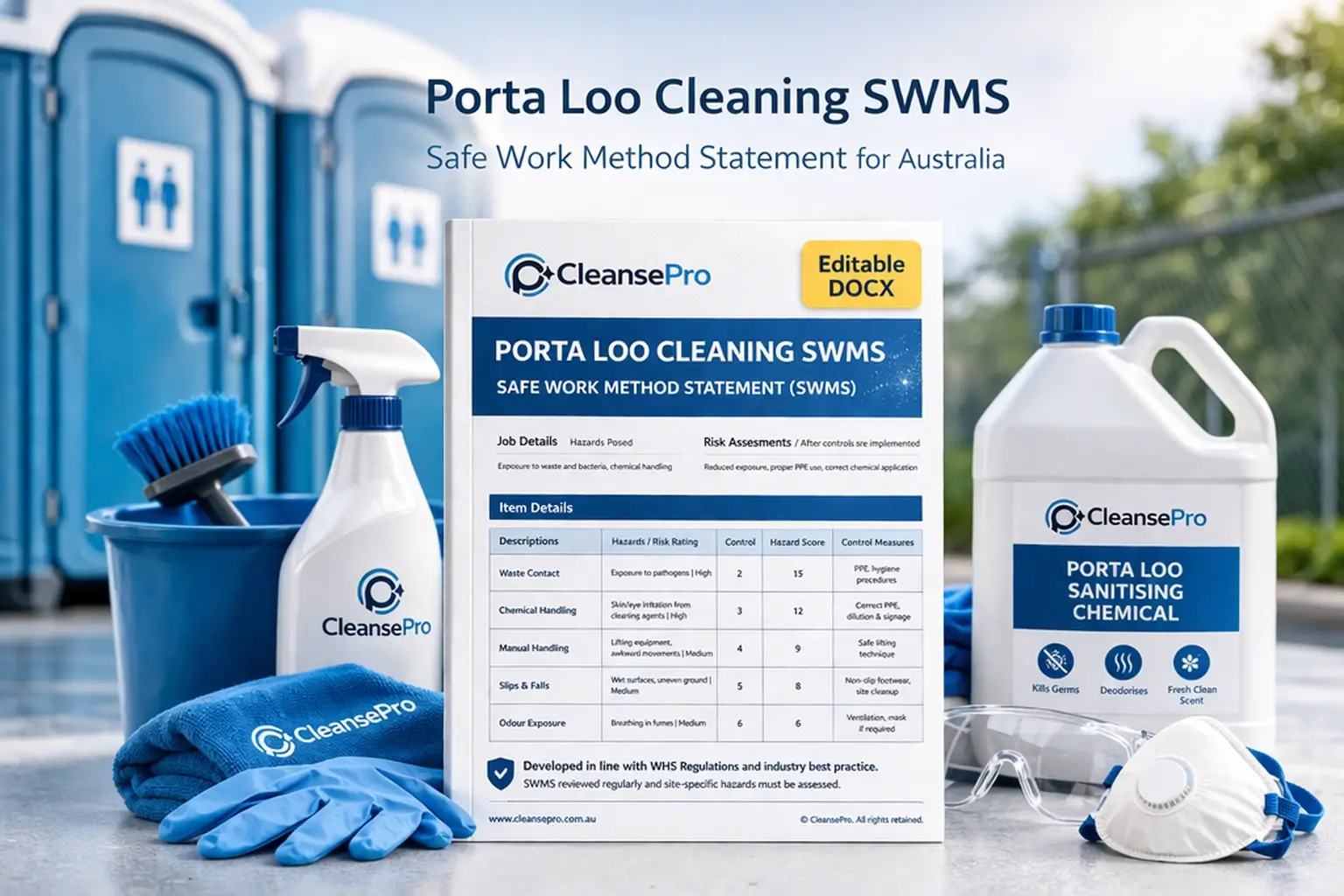
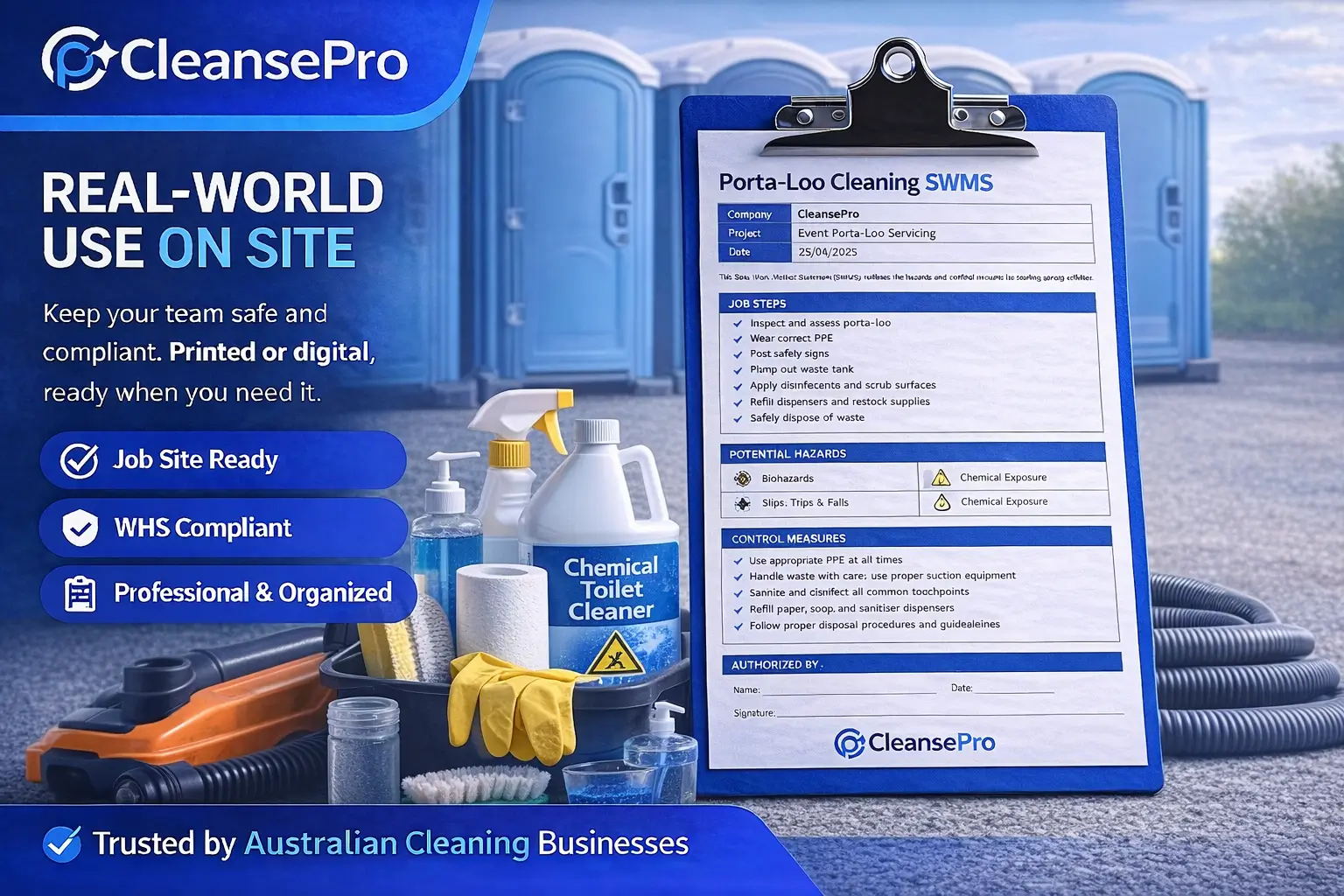
Porta-Loo Cleaning SWMS – 2026 Complete Safe Work Method Statement
Original price was: $79.99.$19.99Current price is: $19.99.
Instant download Porta-Loo Cleaning SWMS in fully editable Word format. Covers H2S gas hazards, 4-gas monitor requirements, OV respirator, mandatory vaccinations, sewage disposal compliance and sharps kit protocol. WHS compliant. One-time purchase, unlimited use.
Description
Porta-Loo Cleaning SWMS – 2026 Edition
This Porta-Loo Cleaning SWMS is a fully editable Safe Work Method Statement for portable toilet servicing and sanitation operations in Australia. Covers pump-out operations, interior cleaning, chemical dosing and decontamination for events, construction sites and public facilities.
The most comprehensive portable toilet cleaning SWMS available in Australia — covering the life-threatening hydrogen sulphide (H2S) gas hazard that most generic templates fail to address adequately.
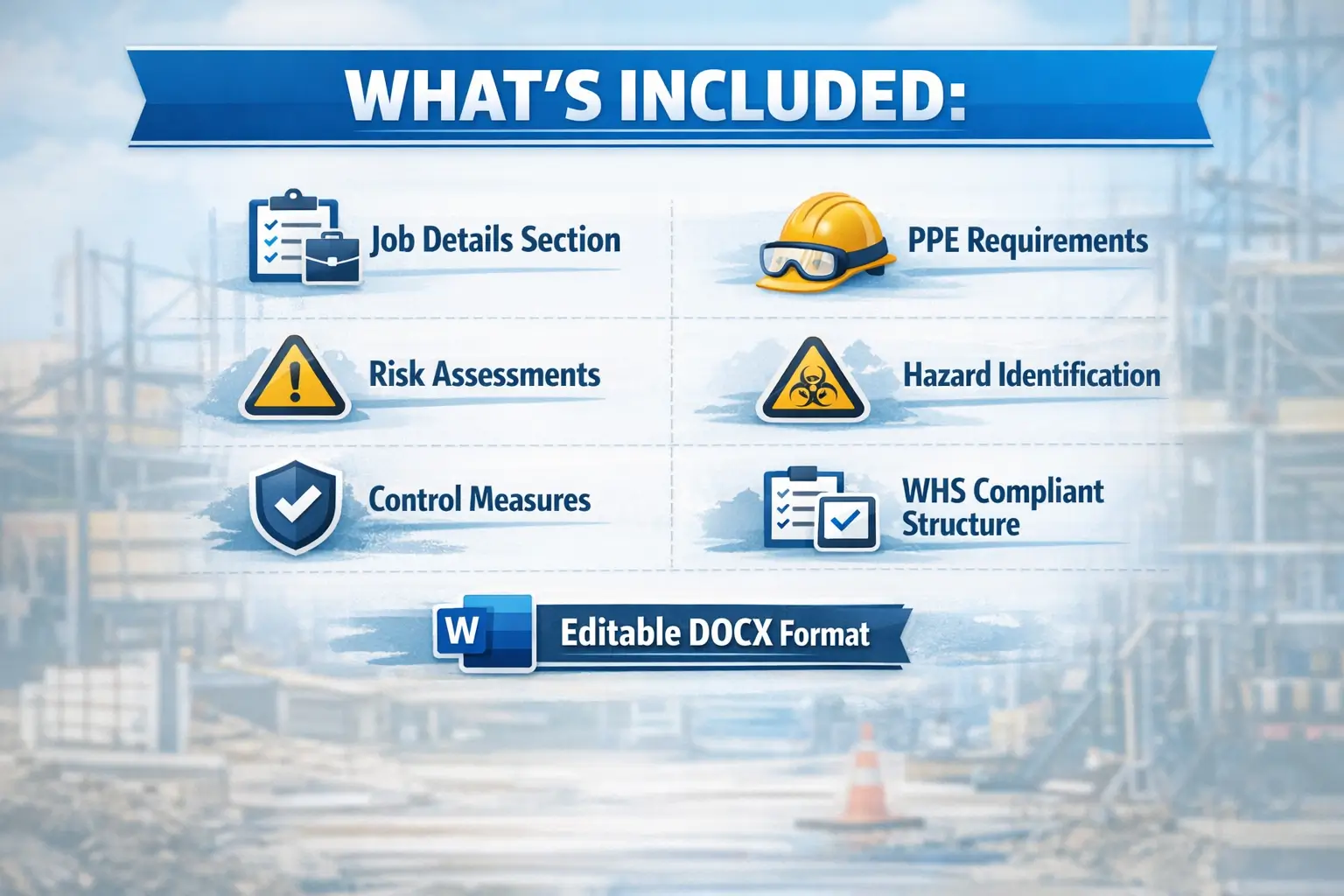
What This Porta-Loo Cleaning SWMS Covers
Planning and Pre-Shift Requirements
- 4-gas monitor calibration check (O2, H2S, CO, LEL) — mandatory before every shift
- Mandatory vaccinations: Hepatitis A, Hepatitis B, Tetanus, Typhoid — all required before commencing porta-loo servicing
- Two-person minimum team — standby within radio range
- Personal Protective Equipment pre-check
H2S Gas Hazard — Critical Controls
- H2S characteristics: colourless, heavier than air (accumulates at ground level), dulls sense of smell — cannot be detected by smell
- Exposure limits: 50 ppm incapacitation, 100 ppm = loss of consciousness within minutes, 300 ppm+ = rapidly fatal
- 4-gas monitor alarm response: evacuate immediately, move upwind, call 000
- Stand upwind when opening waste access points
- Open waste access slowly — allow gases to disperse before approaching
- P2 masks provide NO protection against H2S — OV/P2 combination respirator required for open-air servicing
- NEVER enter a waste tank — a separate Confined Space Entry SWMS and permit is required
Standby Person Responsibilities
- Maintain visual and radio contact throughout operations
- Monitor operator for signs of H2S exposure: headache, dizziness, nausea, confusion
- Do not enter work area to assist collapsed worker without SCBA — call 000 from a safe distance
- Check-in intervals: maximum 5 minutes
Pump-Out Procedure
- Hose connection and security check before activating vacuum
- Continuous 4-gas monitoring during pump-out (agitation increases H2S release)
- Chemical dosing: stand upwind, check 4-gas before approaching tank
Interior Cleaning
- Long-handled brushes — minimise direct hand contact
- Double-gloving — change outer gloves between each unit
- Sharps kit mandatory — needles are commonly found in waste tanks at events, festivals and construction sites
- Biohazard waste disposal
Decontamination Protocol
- Glove change sequence between units
- End-of-shift: shower before eating or leaving site
- Vehicle cab decontamination
- Contaminated PPE disposal as biological waste
Waste Disposal
- Licensed liquid waste facility only — EPA offence to discharge elsewhere
- Waste tracking documentation required
- Vehicle tank level monitoring
Emergency Response
- H2S exposure: evacuate, upwind, 000
- Sewage spill: contain, disinfect, report
- Needlestick: wash wound, 000, medical facility for post-exposure protocol
Key Features
Full H2S Gas Hazard Protocol This is the most dangerous aspect of porta-loo cleaning and the area most poorly covered by generic SWMS templates. This document covers H2S characteristics, detection limits, fatal concentration thresholds, the 4-gas monitor requirement, respirator selection and emergency evacuation.
Mandatory Vaccination Requirements Listed Hepatitis A, Hepatitis B, Tetanus and Typhoid — the four vaccinations required before any worker begins portable toilet servicing — are explicitly listed and tied to commencement controls.
No Confined Space Entry Warning Clearly states that waste tank entry requires a separate Confined Space Entry SWMS and permit — protecting operators from the most common fatality scenario in sewage work.
Standby Person Protocol The standby person’s specific responsibilities, check-in intervals and rescue limitations (do not enter without SCBA) are all documented — the most critical two-person safety requirement in this type of work.
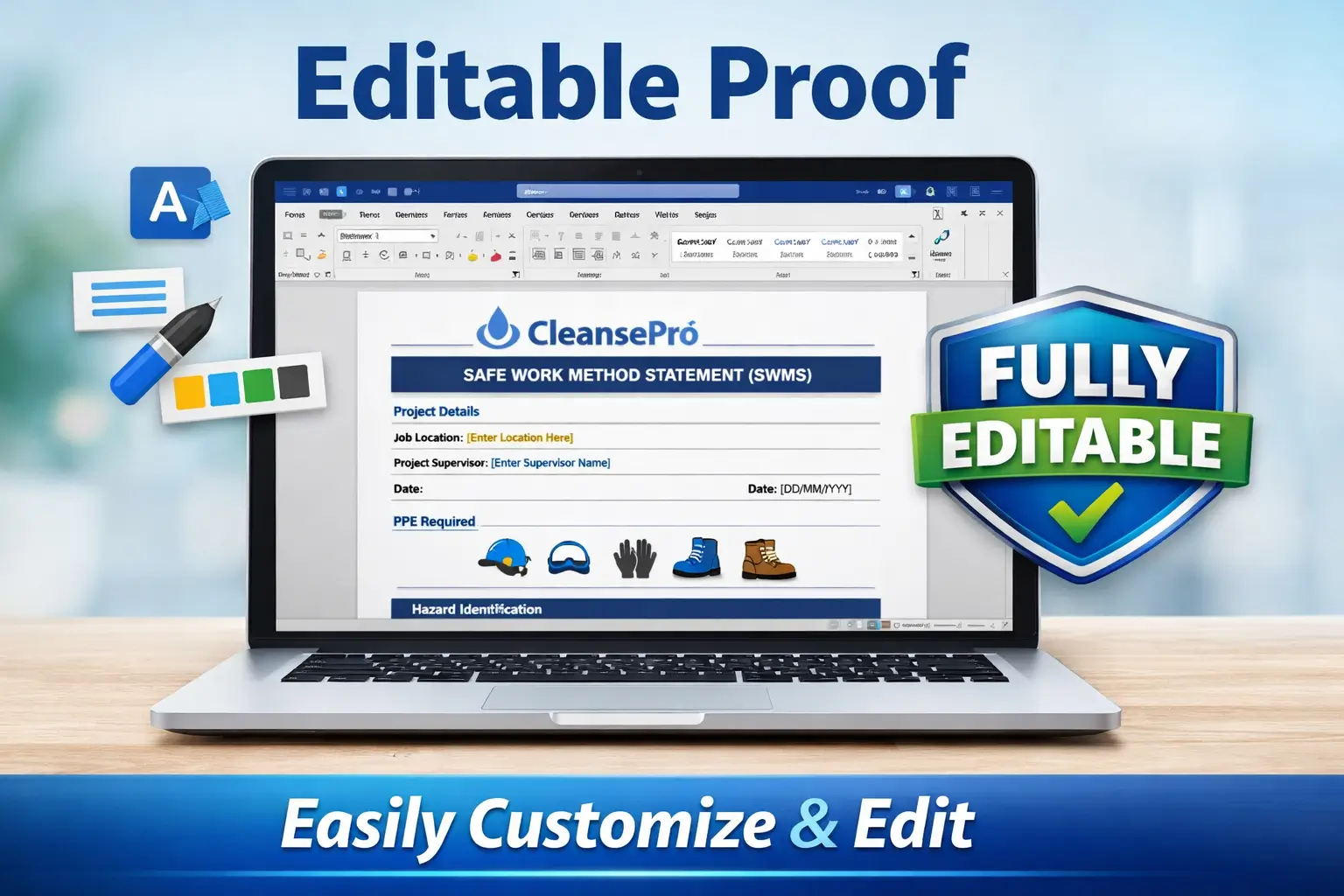
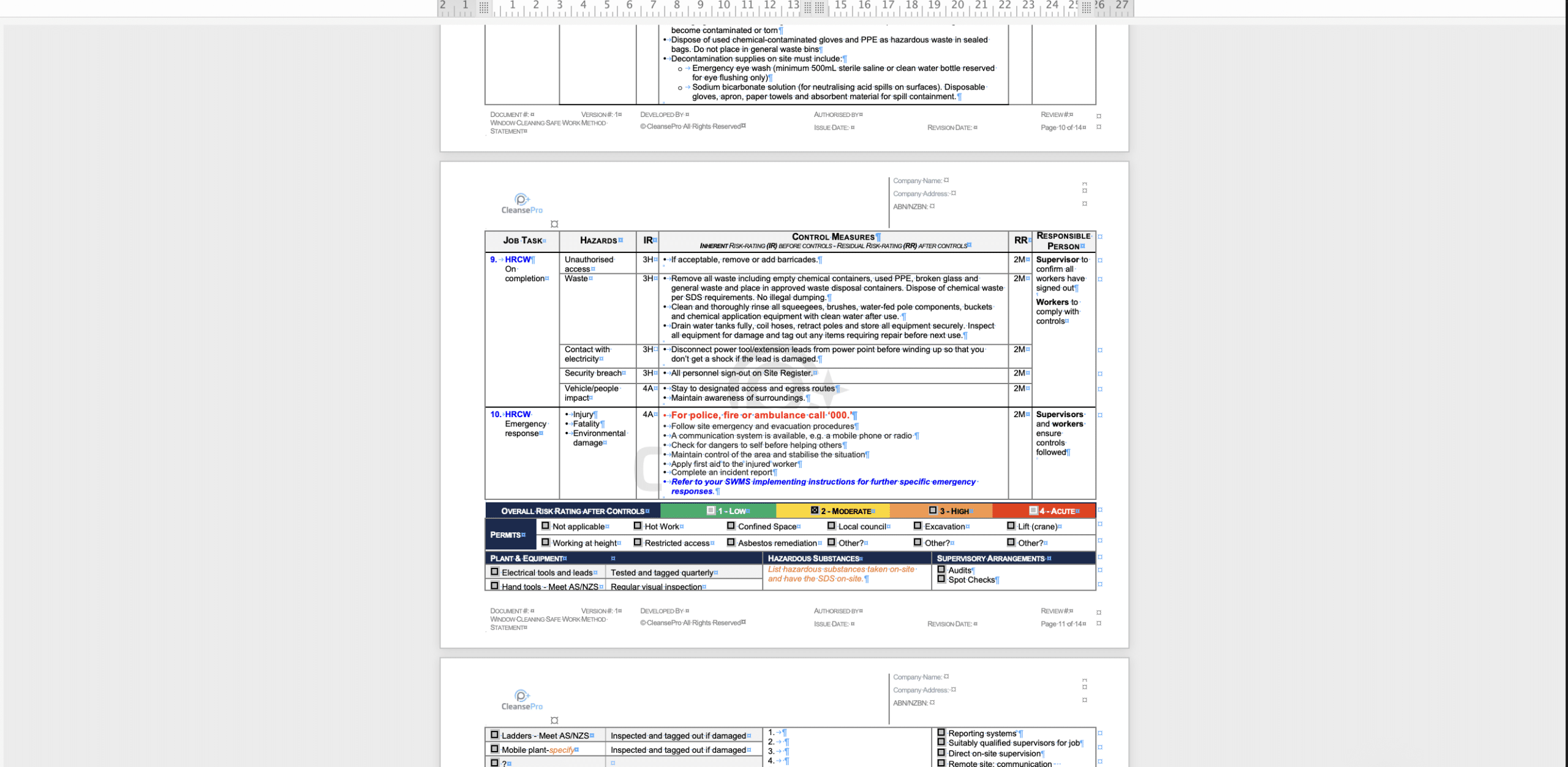
Fully Editable Word Format
Unlimited Use
Bonus: Legislation Reference List included.
Who This Porta-Loo Cleaning SWMS Is For
- Portable toilet hire and servicing companies
- Event management companies managing sanitation facilities
- Construction site sanitation contractors
- Safety officers developing sewage and sanitation WHS documentation
Why This SWMS Exists
There is no other cleaning SWMS in Australia that covers portable toilet servicing to this depth. Generic safety document companies either don’t have this product at all, or cover it with a generic “sanitation cleaning” template that treats sewage the same as mopping a floor. CleansePro has operated on construction sites for over 20 years. We know what happens when H2S is not taken seriously. This document was built to genuinely protect the people who do this work.
Frequently Asked Questions
Do I need a SWMS for porta-loo cleaning? In most construction and event contexts, a Safe Work Method Statement is required for portable toilet servicing involving pump-out operations and chemical handling. Given the life-threatening nature of H2S gas exposure, a comprehensive SWMS covering gas hazards is considered best practice for any portable toilet servicing operator in Australia, regardless of whether a site specifically requires it.
What vaccinations do I need before cleaning porta-loos? Hepatitis A, Hepatitis B, Tetanus and Typhoid vaccinations are recommended for all workers involved in sewage and portable toilet servicing. Workers should confirm their vaccination status before commencing this type of work and consult with their GP or occupational health provider.
What is H2S and why is it dangerous in portable toilet cleaning? Hydrogen sulphide (H2S) is a colourless gas produced by decomposing sewage. It is heavier than air, accumulates at ground level, and — critically — dulls your sense of smell at low concentrations, making you unable to detect increasing levels. Exposure above 100 ppm can cause loss of consciousness within minutes. Exposure above 300 ppm can be rapidly fatal. A calibrated 4-gas monitor is not optional — it is the only reliable means of detecting H2S before it reaches dangerous concentrations.
Related products
-
Sale!
Commercial Kitchen Cleaning SWMS – 2026 Complete Safe Work Method Statement
Original price was: $79.99.$19.99Current price is: $19.99. -
Sale!
High-Rise Cleaning SWMS – 2026 Complete Safe Work Method Statement
Original price was: $79.99.$19.99Current price is: $19.99. -
Sale!
Graffiti Removal SWMS – 2026 Complete Safe Work Method Statement
Original price was: $79.99.$19.99Current price is: $19.99. -
Sale!
Final Builders Clean SWMS – 2026 Complete Safe Work Method Statement Template
Original price was: $79.99.$19.99Current price is: $19.99.
Reviews
There are no reviews yet.